
Every business owner get a monthly headache whenever they go through their electricity bills. Whether you run a small business, a big office, or a large manufacturing facility, the cost of running your facilities can quickly eat into your profits. And with energy prices slowly rising, many businesses keep thinking: is there a smarter, more predictable way to manage energy costs? Introducing Solar power. Solar power was once seen as a niche, eco-focused investment and now it has evolved into a practical, money-saving solution for all types of businesses.
Imagine generating your own electricity during the day, minimising or even removing the amount you pay to the grid. This is not just good for the environment, but also for your bottom line. But here’s the catch: not every business receives the same savings, and the numbers depend on factors such as how much energy you are using, size of the building, and available incentives. So how much could solar installation save your business?
According to Solar Power Portal, more than 20,000 installations were completed in April 2025, adding 82MV of capacity.
Reports from pv magazine International state that the UK saw 57,000 rooftop installations in Q1, the strongest first quarter since 2012.
In this article, we will get to know typical savings, factors that affect your return, real-world examples, and steps to calculate your benefits. By the end, you will be able to picturise if solar isn’t just green but financially smart for your business too.
Businesses are increasingly facing rising electricity bills. In many regions, commercial electricity rates have increased by 10–20% over the past few years, putting a strain on operational budgets. Solar installation offers a way to:
For many businesses, solar is not just an environmental choice—it’s a financial strategy.
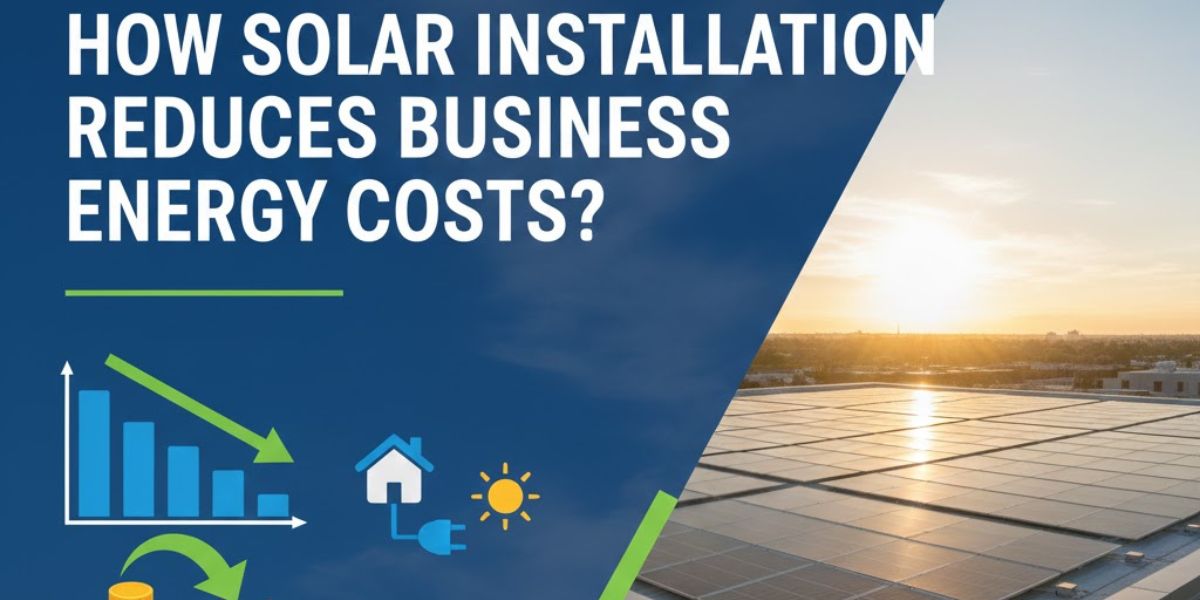
The primary way solar saves money is by reducing the amount of electricity purchased from the grid. Here’s a closer look at how it works:
Offset Electricity Costs
Solar panels produce electricity during daylight hours, which can directly power your business operations. The more energy your system produces, the less electricity you need from the utility company.
Reduce Peak Demand Charges
Many commercial utility rates include higher charges during peak usage hours. Solar generation often coincides with these periods, helping to lower demand charges.
Avoid Future Rate Increases
Electricity prices are unpredictable. By investing in solar, your business locks in a portion of its energy at a fixed rate for decades.
Sustainable Branding
While not directly a financial benefit, showcasing a commitment to renewable energy can attract eco-conscious clients and employees, indirectly supporting revenue growth.
Savings from solar vary based on location, electricity usage, and system size, but here are some general ranges:
| Business Type | Monthly Savings | Annual Savings | Energy Offset |
| Small office / retail | $100–$500 | $1,200–$6,000 | 30–50% |
| Medium warehouse / manufacturing | $500–$2,000 | $6,000–$24,000 | 40–70% |
| Large commercial property | $2,000+ | $24,000+ | 50–90% |
These figures are averages. Actual savings depend on several factors, which we’ll explore in the next section.
Not all businesses will see the same return from solar. Several critical factors determine your potential savings:
Businesses with high daytime electricity consumption benefit most from solar. Peak-hour energy usage aligns with peak solar production, maximising savings.
A larger, south-facing roof (in the northern hemisphere) without shade from trees or buildings produces more energy, increasing savings.
High-efficiency panels generate more electricity from the same sunlight, but may cost more upfront. Matching system size to energy usage ensures optimal ROI.
Sunlight hours vary by region. Businesses in sunny states or countries see faster returns than those in areas with frequent cloud cover.
Federal, state, and local incentives, such as tax credits, rebates, and accelerated depreciation, can dramatically reduce upfront costs, shortening the payback period.
A common question for business owners is: how long until my solar system pays for itself?
Upfront Costs
Commercial solar systems typically range from tens of thousands to hundreds of thousands of dollars, depending on size.
Payback Period
Most businesses recover their investment in 3–7 years, after which energy savings translate into net profit.
ROI
Over a 20–25 year system lifespan, businesses often see a 2–3× return on the initial investment.
Incentives and Tax Benefits
For example, the U.S. Federal Investment Tax Credit (ITC) allows businesses to deduct a portion of the system cost from their taxes, further improving ROI.
Example 1 – Small Office:
A 5,000 sq. ft. office installs a 50 kW solar system.
Example 2 – Manufacturing Facility:
A 50,000 sq. ft. warehouse installs a 500 kW system.
Example 3 – Retail Chain:
A retail chain with multiple locations installs solar panels at three sites, each 100 kW.
These examples demonstrate that solar can benefit businesses of all sizes, not just large corporations.
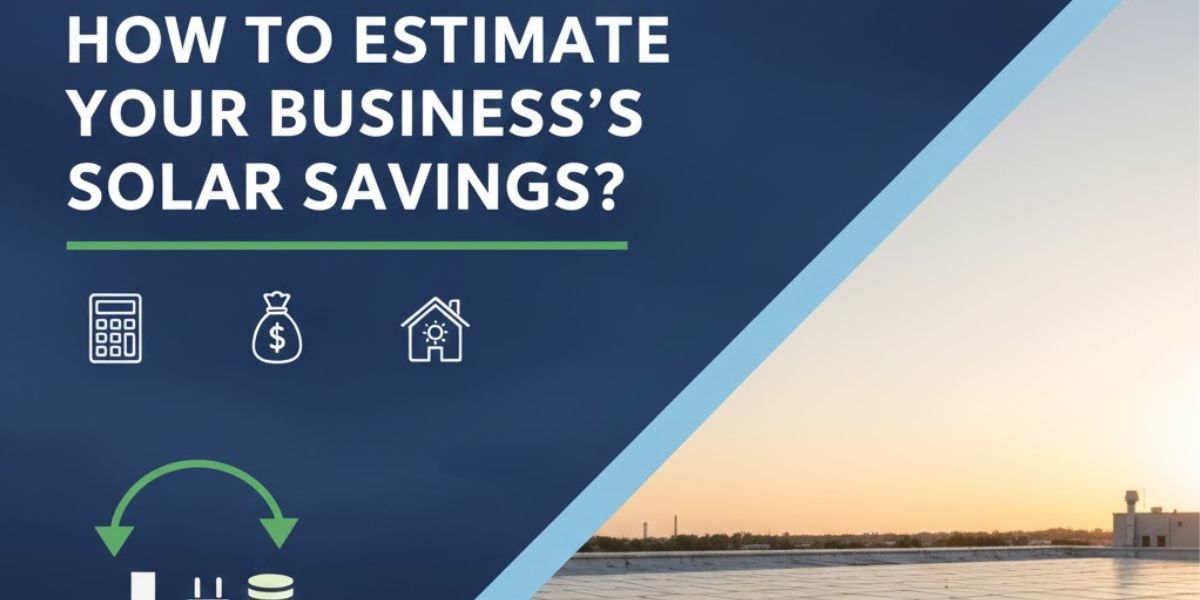
To calculate potential savings, businesses should gather:
Many solar companies offer online calculators for rough estimates. For precise calculations, a custom assessment is essential.
While cost reduction is the primary motivation, solar provides additional benefits:
Energy Independence
Businesses are less vulnerable to grid outages or fluctuating electricity prices.
Sustainability Goals
Switching to solar reduces carbon emissions, helping companies meet environmental targets.
Enhanced Property Value
Properties with solar systems often see higher valuation due to lower operating costs.
Marketing Advantages
Promoting renewable energy usage can strengthen brand reputation and attract eco-conscious customers.
Solar installation is particularly beneficial for businesses that:
Even for smaller operations, solar can provide meaningful financial and environmental returns. The key is evaluating energy usage, system size, and incentives carefully.
Savings depend on factors like electricity usage, system size, roof space, and location. Small businesses might save a few thousand dollars annually, while larger facilities could save tens of thousands. A custom assessment gives the most accurate estimate.
The typical payback period for commercial solar is 3–7 years, depending on energy usage and incentives. After that, your business enjoys virtually free electricity for decades.
Key factors include:
Yes! With landlord approval, solar can be installed. Alternatively, Power Purchase Agreements (PPAs) allow businesses to benefit from solar without owning the system outright.
Commercial installations are phased to minimize disruption. Most businesses continue normal operations during the process.
Solar panels still generate electricity on cloudy days, though output is reduced. At night, your business uses electricity from the grid unless paired with a battery storage system.
Yes. Many regions offer federal, state, and local incentives, such as tax credits, rebates, or accelerated depreciation, which can significantly lower upfront costs.
Solar is often worth it for businesses with daytime electricity usage, suitable roof space, and eligibility for incentives. A professional assessment provides a clear picture of potential savings.
Solar installation can be a smart financial decision for businesses of all sizes. With predictable energy costs, substantial long-term savings, and environmental benefits, solar provides both economic and strategic value. By carefully assessing energy usage, roof space, and local incentives, businesses can determine exactly how much they could save and take control of their energy future.
Take the first step today with Arc Renewables—calculate your potential solar savings and see how solar can benefit your business.