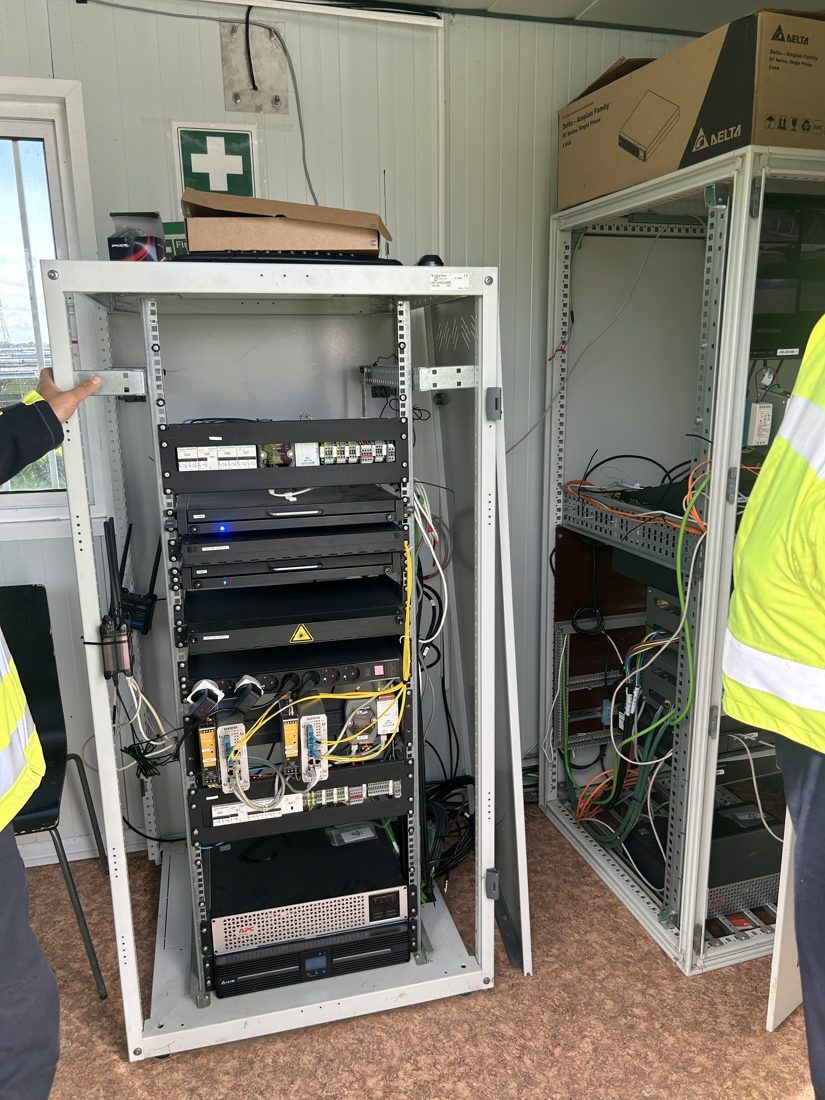
The decisive finding
One number ruled out the obvious upgrade
The instinct on a site of this age is to repower to modern 1500 V inverters. The site's own electrical design ruled that out. The array operates at roughly 730 V DC, below the approximately 850 V minimum tracking voltage of current 1500 V inverters. They simply would not work without restringing the entire array, a repower-scale intervention that is not justified while the modules are healthy and in warranty, and one that would carry real subsidy accreditation risk under the tariff.
730 V vs 850 V
The array's DC operating voltage sits below the tracking floor of modern 1500 V inverters. That single figure set the entire direction of the study.
The recommended route is replacement with 1000 to 1100 V string inverters, reusing the existing site transformers and their established grid interface. Indicative all-in cost falls between £0.5M and £0.8M. Crucially, the inverter hardware itself is only 15 to 25 per cent of that figure; the substantial costs sit in DC re-termination, AC collection redesign, the medium-voltage interface and protection, the grid application, monitoring, and labour.
Why it stacks up
String inverters change the risk profile, not just the kit
The recovered yield comes from three sources: a modular failure mode, where losing one string inverter costs a fraction of output rather than a sixth of the site; far finer tracking, moving from six zones to several hundred and recovering losses from per-string shading; and closing the monitoring blind spot at the second station so faults are seen and fixed sooner.
There is a strategic point too. The original central inverters are bespoke, with no commodity replacement market now that the manufacturer has left that business. String inverters carry standardised interfaces and commodity pricing, so any future discontinuation becomes a manageable replacement event rather than an orphaning risk. Extended warranties to 2036 and a small holding of on-site spares decouple uptime from the supply chain.
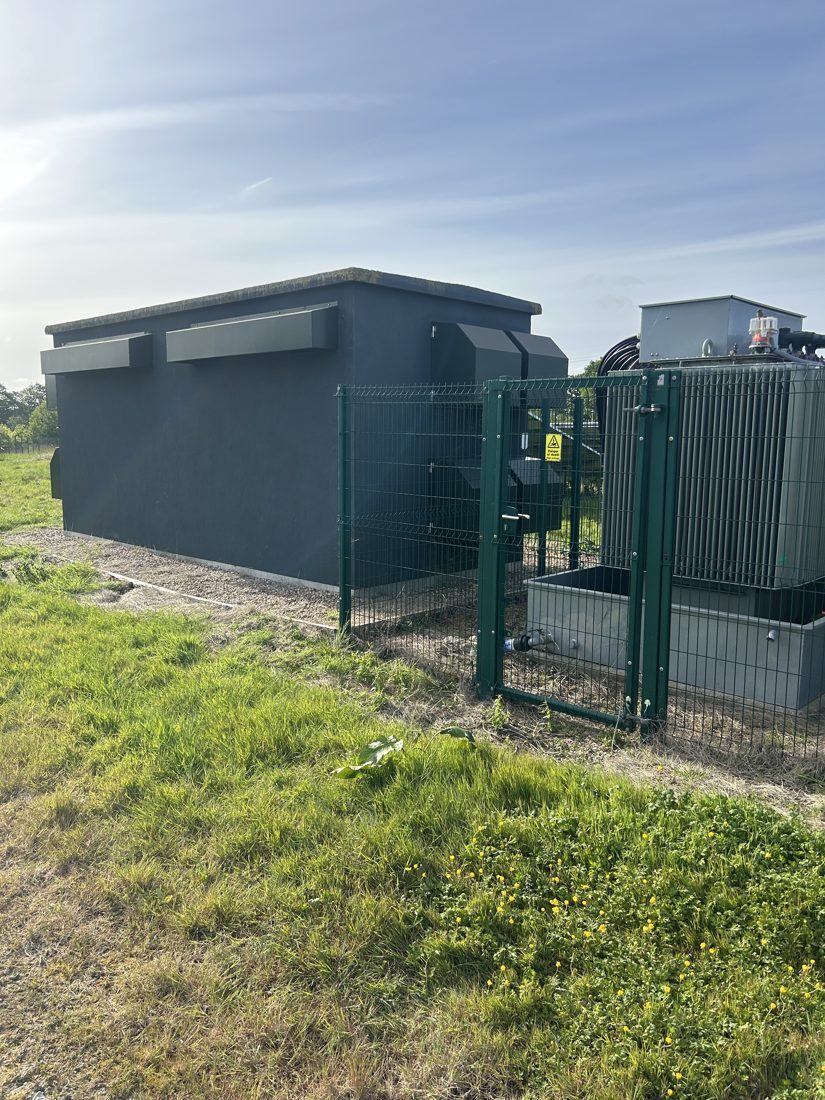
An inverter station and its transformer. The existing transformers are retained under the recommended route, avoiding the cost and risk of reworking the grid interface.
How we helped
The work behind the recommendation
Arc carried the study as independent technical adviser, owing nothing to any supplier or contractor. The work ran across several strands, each feeding a single board-ready conclusion.
Evidence and performance
Reconciled 27 monthly operating reports against the society's independent model across 71 months, establishing a baseline accurate to within 2.6 percentage points.
Voltage and architecture
Identified the approximately 730 V DC operating point as the governing constraint, ruling out a 1500 V repower and directing the study toward string inverters.
Options appraisal
Compared candidate routes on yield recovery, availability, monitoring and cost, with an indicative all-in figure of £0.5M to £0.8M and a clear breakdown of where the cost actually sits.
Transformer reuse
Confirmed the existing site transformers can be retained, avoiding a costly and risk-laden rework of the medium-voltage grid interface.
Phasing strategy
Set out a two-phase programme aligned to the two inverter stations, sequenced to protect generation income, with the order flagged as a board-level choice at equal cost.
Owner's engineer
Positioned Arc to continue, if the board wishes, through specification, procurement, the grid process and oversight of phased delivery.
The value to the client
A decision the board can act on
The study, with a standalone executive summary, was delivered ahead of the society's board meeting. It gives the directors a costed, evidence-based route to protect output for the remaining decade of the tariff, a clear understanding of why the obvious upgrade does not apply here, and a phasing plan that keeps the asset earning while the work is carried out.
The study is currently with the board for consideration. Arc's role throughout has been to give an honest, independent technical view, not to sell a solution.